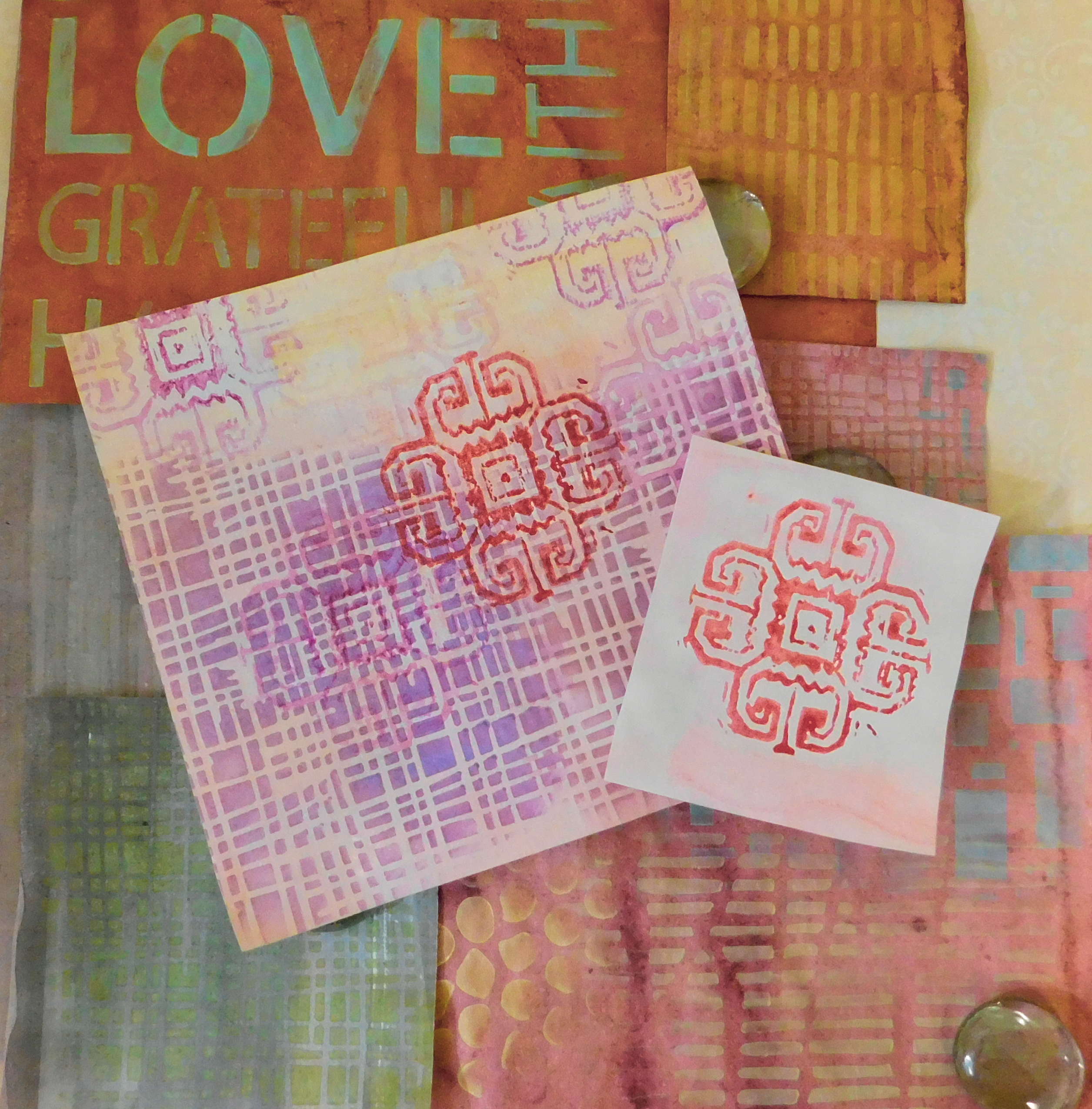
Wet Stenciling and Stamping With Pastels
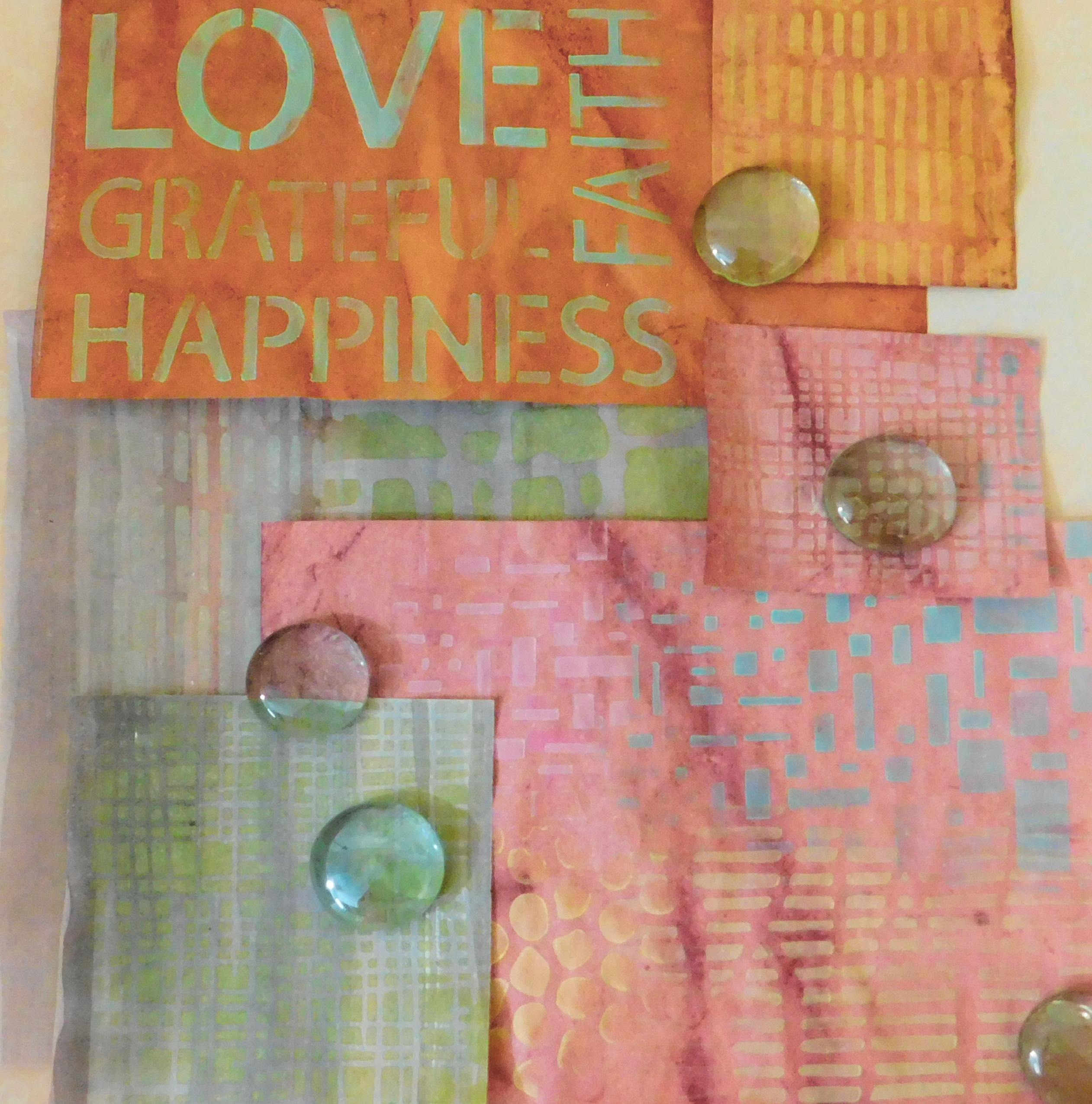
Familiar drawing mediums offer untapped opportunity when applied in different ways. Just by using a palette, adding water or alcohol water soluble oil pastels and dry chalk pastels almost become like a new medium that you can use to paint, stencil or stamp with while maintaining their inherent characteristics. Scrub some of each medium on a styrofoam palette, spritz with your liquid and then apply as shown.
You’ll need a few materials in addition to your mediums. Blending brushes are ideal, use a different set for each medium or wash them thoroughly. Stencils and stamps of your choice. Water alone is probably best for water soluble oil crayons and 50/50 water/rubbing alcohol ratio mixture for dry pastels. Alcohol dissolves dry chalk pastels for painting. A few palettes, styrofoam plates work well and some paper of your choice for working on are all you need to start.
Water soluble oil pastels can be used wet or dry but you can also make a paint like mixture just by scrubbing the pastel on a palette and spritzing with water. You can then use this to paint, stencil or stamp with. Opacity will vary similar to ink, watercolor or acrylic but the thickness of the medium allows for better control when stenciling. The more you apply to your palette the thicker and more opaque it becomes like real oil paint. You can also apply it directly by coloring a rubber stamp and get a very thick inky like coat for stamping. The more you mist the more translucent it becomes.
You can use watercolor over or under water soluble oil pastels so experiment with different layering techniques.
Dry or chalk pastels are another medium that can be used wet instead of dry just by using rubbing alcohol to dissolve them. A 50/50 mixture is fine but you might want to experiment with the ratio. The effect is magical and you won’t know how it turns out until it is dry but you can easily apply more or less to achieve a variety of results. The finish is matte like chalk.
Both mediums offer a level of control similar to traditional ink stenciling, though it’s important to use a light hand. Too much liquid on a blending brush can cause seepage under a stencil, so blot excess moisture before applying. Alcohol evaporates quickly, keeping brushes drier, and water-soluble oil pastels tend to stay put better than watercolor due to their thickness—both helpful traits for controlled stenciling and stamping.
For dry pastels test your surface after application. Use a paper with some tooth, sketchbook paper made especially for drawing to grab the dry chalk pastel for best results. You might need a spray fixative, it depends on your surface.
The colors are brilliant with each medium but the results are quite different. Dry pastels are more opaque, matte and offer rustic appeal while the water soluble oil pastels are more like ink or acrylics yet can also be translucent. With just a little practice the ability to control each medium is excellent giving you good predictable results. These unusual applications for drawing mediums open new avenues for creativity but are remarkably easy to control. Both mediums just require a soap and water clean up for breezy creative fun.
Happy paper crafting!